
A supercargo is a representative who attends port operations on behalf of the cargo owner or charterer and follows up that cargo is loaded, stowed and documented in line with their instructions. Acting as the principal's eyes and voice on site, the supercargo liaises with the vessel, the terminal and the agent.
What is Supercargo Services?
A supercargo attends the operation on behalf of the cargo owner or the charterer and follows up that their instructions are carried out on site. The supercargo handles communication with the vessel, the terminal and the agent on matters such as loading sequence, stowage and documentation.
Unlike a surveyor, the supercargo is not an impartial observer but a representative looking after the interests of the principal. The duties and limits of authority are therefore agreed in writing with the principal beforehand.
Supercargo services are typically used where parcels for different receivers are loaded on the same vessel, where a specific loading sequence or separation matters, and where the way cargo is stowed directly affects the risk of damage. Project cargo, steel products and mixed general cargo are typical examples.
The assignment can extend from pre-loading coordination through to checking documents at completion. Which stages are included is agreed at the quotation stage.
Why does it matter?
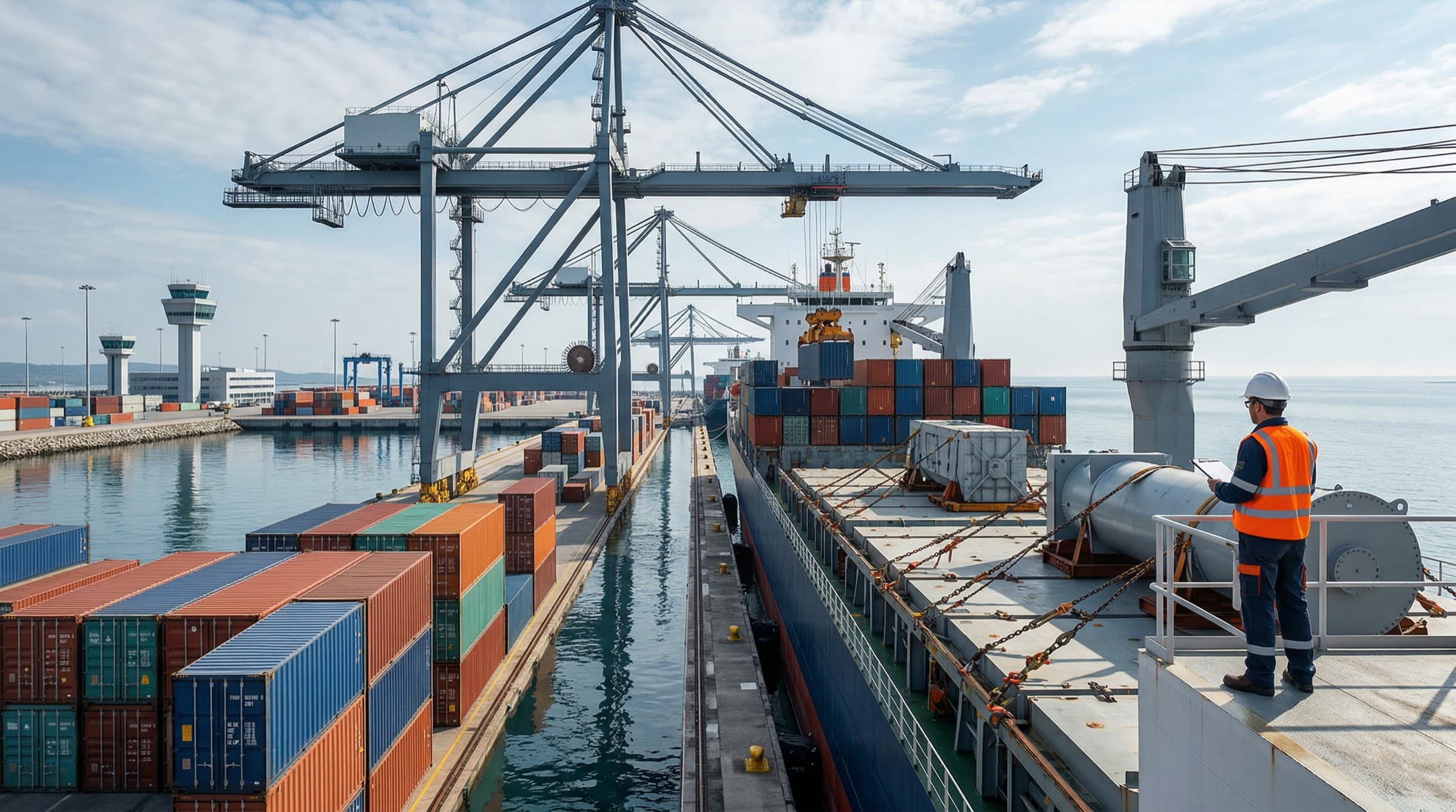
When the cargo owner or charterer is not on site, decisions on stowage and loading sequence are often taken by the vessel and the terminal alone. A supercargo ensures the principal's instructions are taken into account in those decisions.
Errors such as a parcel going into the wrong hold, insufficient separation between parcels or heavy cargo stowed on top of sensitive cargo can lead to significant costs at the discharge port. A representative on site can spot and report such errors as they happen.
Checking on site that operational documents such as the mate's receipt, loading list and stowage plan agree with the principal's records reduces the risk of disputes at the bill of lading stage.
Who is it for?
- Cargo owners who want to be represented on site during operations
- Charterers who want their instructions followed up during port operations
- Companies shipping project cargo or sensitive cargo
- Exporters loading parcels for several receivers on the same vessel
- Traders managing operations remotely who need regular updates from the port
Scope of service
- On-site follow-up of loading and stowage instructions
- Operational liaison with the vessel, terminal and agent
- Observation of loading sequence and separation between parcels
- Follow-up of hold allocation and stowage plan against instructions
- Observation of dunnage, separation and protective materials in use
- Follow-up of operational documents such as the mate's receipt, loading list and stowage plan
- Regular status reports to the principal
The exact scope is agreed at the quotation stage according to the nature of the operation.
Key checkpoints
- 01Compliance with instructions
- The principal's written loading and stowage instructions are compared with practice on site; deviations are noted with their reasons and reported.
- 02Parcel separation
- Hold allocation, marking and use of separation materials are followed to prevent cargo belonging to different receivers or bills of lading from mixing.
- 03Stowage and protection
- The supercargo checks that heavy cargo is not stowed on top of sensitive cargo, that sufficient dunnage is used and that contact between cargo and ship's structure is properly prevented.
- 04Document consistency
- Piece count, weight and remarks on the mate's receipt and loading lists are checked against the situation on site and the principal's records.
- 05Communication flow
- Plan changes from the vessel or terminal are passed to the principal promptly, and matters needing a decision are referred for approval.
How does the process work?
- 01
Receiving instructions
The principal's loading, stowage and documentation instructions and the supercargo's limits of authority are clarified.
- 02
Pre-operation coordination
The operation plan and stowage plan are agreed with the vessel, terminal and agent.
- 03
On-site representation
Compliance with instructions is followed throughout the operation and deviations are reported immediately.
- 04
Document check
At completion, the mate's receipt, loading list and stowage plan are compared with the principal's records.
- 05
Close-out
The outcome of the operation and the documents are reported to the principal.
Information we need from you
- Principal to be represented and scope of authority
- Cargo details, parcel breakdown and loading/stowage instructions
- Vessel, port and operation timing
- Agent and terminal contact details
- Required frequency of status reports and their recipients
Reporting
- Status reports during the operation
- Records of deviations from instructions and incidents
- End-of-operation report
Report content and format are agreed according to your request.
Key terms
- Parcel
- A lot of cargo carried on a vessel that belongs to a specific bill of lading or receiver.
- Separation
- Keeping different parcels apart with tarpaulins, nets, paint marks or physical separators to prevent mixing.
- Dunnage
- Timber, plywood and similar material used to keep cargo clear of the ship's structure and other cargo, spread loads and allow ventilation.
- Stowage plan
- A plan showing how cargo is distributed by hold and position on board; prepared before loading and updated on completion.
Frequently asked questions
What is the difference between a supercargo and a surveyor?
A surveyor carries out impartial observation and recording. A supercargo represents a specific party and follows up that their instructions are carried out.
When is a supercargo typically used?
When the cargo owner or charterer cannot be present on site but wants a say in how cargo is loaded and stowed.
Is the supercargo on board or on the quay?
Depending on requirements, the supercargo may be on the quay, on board or both. The place of duty is planned according to the nature of the operation.
Can a supercargo stop the operation?
The supercargo's authority depends on the agreement with the principal and the contract terms. Decisions on the safety of the vessel always rest with the master; the supercargo reports deviations and conveys the principal's instructions.
Does the supercargo sail with the vessel?
Under this service, the supercargo's role relates to the port operation. Other requests, such as remaining on board during the voyage, are assessed separately at the quotation stage.