
Loading and discharge supervision is the independent monitoring and recording of cargo condition, quantity indicators and handling methods throughout a vessel's port operation. Its purpose is to give the parties an impartial, documented record in case of damage, shortage or delay disputes.
What is Loading and Discharge Supervision?
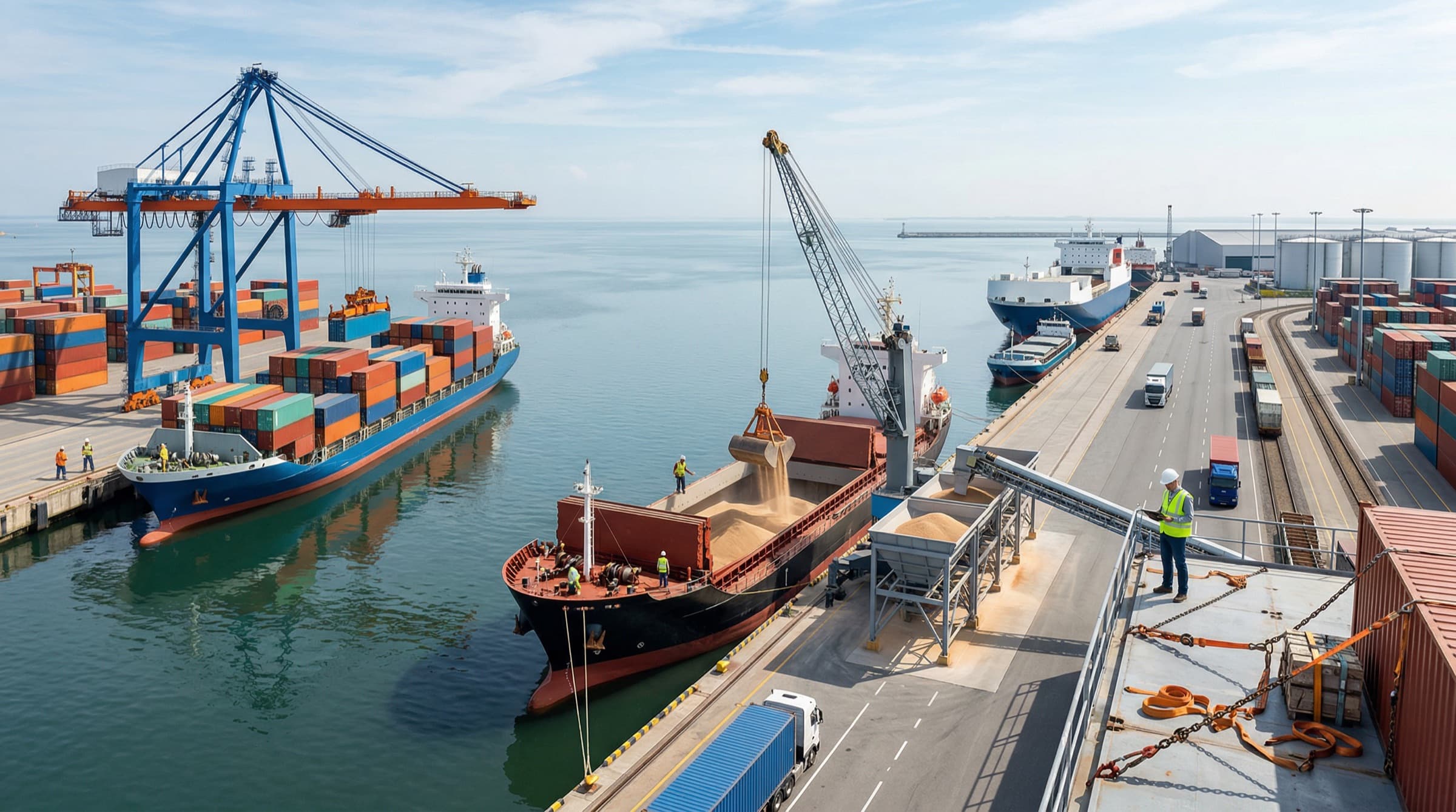
Loading and discharge supervision means attending the vessel on site and following every cargo-related stage from arrival until completion of operations. The surveyor records hold suitability, the conditions under which cargo is transferred between ship and shore, weather and equipment-related stoppages, and any damage observed.
At the load port, the focus is on the condition in which cargo is delivered to the vessel and whether the holds are fit for that cargo. At the discharge port, attention shifts to the condition in which cargo leaves the vessel: wetting, heating, contamination or stowage-related damage in the holds, and the circumstances of delivery.
Supervision can be applied to dry bulk, steel products, bagged cargo, project cargo and general cargo. The critical points vary by cargo type; for bulk, hold cleanliness and rain stoppages are key, while for steel the main concerns are wetting, rust and handling damage such as dents and crushed edges.
The resulting records serve as an independent reference for quantity, damage and time disputes between shippers, receivers, owners, charterers and insurers. The exact stages covered are agreed at the quotation stage.
Why does it matter?
Most cargo claims in sea transport turn on proving at which stage damage or shortage occurred. Impartial records taken during the operation help distinguish pre-shipment condition from handling damage and from damage sustained during the voyage.
Time-stamped records of rain, equipment breakdowns, waiting for cargo or terminal-related stoppages give the parties concrete data for laytime and demurrage calculations and for checking the accuracy of the statement of facts.
Reporting a nonconformity as soon as it is noticed allows the responsible parties to deal with it before it escalates, which can prevent long and costly disputes later on.
Who is it for?
- Shippers and exporters who need evidence that cargo was loaded complete and in sound condition
- Receivers and importers who want cargo condition established before taking delivery
- Owners, charterers and agents who require independent oversight of port operations
- Cargo insurers and P&I parties who need documentation for damage or shortage claims
- Traders whose letter of credit or sales contract calls for an independent supervision report
Scope of service
- Pre-loading hold and deck suitability check (cleanliness, dryness, odour, hatch cover condition)
- Visual inspection of hatch covers and coaming/seal areas
- Observation of cargo handling methods and gear in use
- Recording of damage, wetting and contamination seen during loading or discharge
- Logging of weather, equipment breakdowns and other stoppages with start and end times
- Monitoring of loading or discharge progress hold by hold
- Observation of final stowage and cargo condition on completion
- Dated, captioned photographic record throughout the operation
The exact scope is agreed at the quotation stage according to the nature of the operation.
Key checkpoints
- 01Hold suitability
- Before loading, the holds are checked for residues of previous cargo, moisture, odour, rust scale or openings; any hold found unfit is reported to the parties concerned.
- 02Apparent cargo condition
- Colour, moisture, packing integrity and the presence of foreign matter are monitored throughout; suspect lots are photographed and recorded.
- 03Handling practice
- The surveyor watches whether grabs, slings, forklifts or conveyors are used in a way that damages the cargo, and notes drops, impacts and chafing.
- 04Rain and weather
- For moisture-sensitive cargo, the surveyor records whether hatches were closed promptly when rain started and whether any cargo got wet.
- 05Time records
- Commencement, stoppage and completion times are logged with their reasons so they can be compared against the statement of facts.
How does the process work?
- 01
Request and scope
Vessel name, port, ETA, cargo type and the requesting party's expectations are collected; the scope of supervision and report contents are agreed.
- 02
Pre-operation check
Holds, hatch covers and handling gear are inspected before operations start; nonconformities are reported to the parties concerned.
- 03
Operation monitoring
Cargo condition, handling methods and stoppages are recorded continuously during loading or discharge, and significant events are passed on to the client.
- 04
Completion check
On completion, final hold condition, stowage and any cargo remaining on the quay are observed.
- 05
Close-out and reporting
Observations, photographs and time records are compiled into a report in the requested format and issued.
Information we need from you
- Vessel name and IMO number
- Port / terminal and estimated time of arrival
- Cargo description, quantity and type of packing
- Requesting party and report recipients
- Any special instructions (e.g. charter party terms, letter of credit requirements, receiver's requests)
Reporting
- Loading / discharge supervision report
- Dated photographic appendix
- Stoppage and time log
- List of damage and nonconformities observed
Report content and format are agreed according to your request.
Key terms
- Statement of Facts (SOF)
- A chronological record of events and times during a vessel's port call, from arrival to departure; it is the basis for laytime and demurrage calculations.
- Laytime
- The time allowed under the charter party for loading or discharging. Exceeding it gives rise to demurrage; finishing early may earn despatch, depending on the contract.
- Hold condition survey
- A visual inspection before loading to confirm that cargo holds are clean, dry, odour-free and structurally suitable for the intended cargo.
- Contamination
- Deterioration of cargo quality through mixing with previous cargo residues, foreign matter, oil or another cargo.
Frequently asked questions
Is supervision provided for loading or for discharge?
Both. At the load port the surveyor records how cargo is transferred to the vessel; at the discharge port, how it leaves the vessel and its condition at delivery.
Does the surveyor intervene in the operation?
The surveyor's role is independent observation and recording. Risks and nonconformities are reported to the relevant parties immediately; operational decisions remain with those who are authorised to make them.
What happens if a hold is found unsuitable?
The surveyor records the finding with photographs and notifies the client and the ship's officers. Decisions such as re-cleaning the hold or delaying loading are taken by the parties.
Can the supervision report be used in laytime or demurrage disputes?
The stoppage and time records in the report are an independent data source for checking the statement of facts. How the report is weighed in a dispute depends on the contract and the parties' positions.
Does loading supervision include quantity determination?
Supervision records cargo condition and handling. A draft survey for weight, or tally services for unit counts, can be requested separately or together with supervision.
When is the report delivered?
Delivery time depends on the length of the operation and the scope of report requested; it is agreed at the quotation stage.