
Parcel separation means keeping cargo belonging to different receivers or bills of lading physically distinguishable on board, through hold allocation, separation material and marking, so that each lot can be delivered without mixing at the discharge port. Done poorly, parcels mix in the holds, tallying and delivery drag on and disputes between receivers become likely.
What do parcel and separation mean in shipping?
A parcel is a lot of cargo covered by one bill of lading or destined for one receiver. A single vessel may carry dozens of them: steel plates in different dimensions, rebar in different grades or bagged goods for several buyers.
Separation is the way these parcels are stowed so they can be told apart. The goal is for every receiver to collect only its own cargo with as little rehandling as possible. The method depends on the commodity, the hold configuration and the port rotation.
Which separation methods are used?
The most reliable approach is giving each parcel its own hold, or a clearly bounded section of a hold. That is not always possible, so in practice several methods are combined.
The choice should balance ease of discharge with protection of the cargo.
- Separation by hold or by section within a hold
- Polythene sheets, tarpaulins or nets as separation material
- Paint marks, tape or tags identifying each parcel
- Timber and dunnage creating physical layers between lots
- Natural separation for bulk parcels where the contract allows it
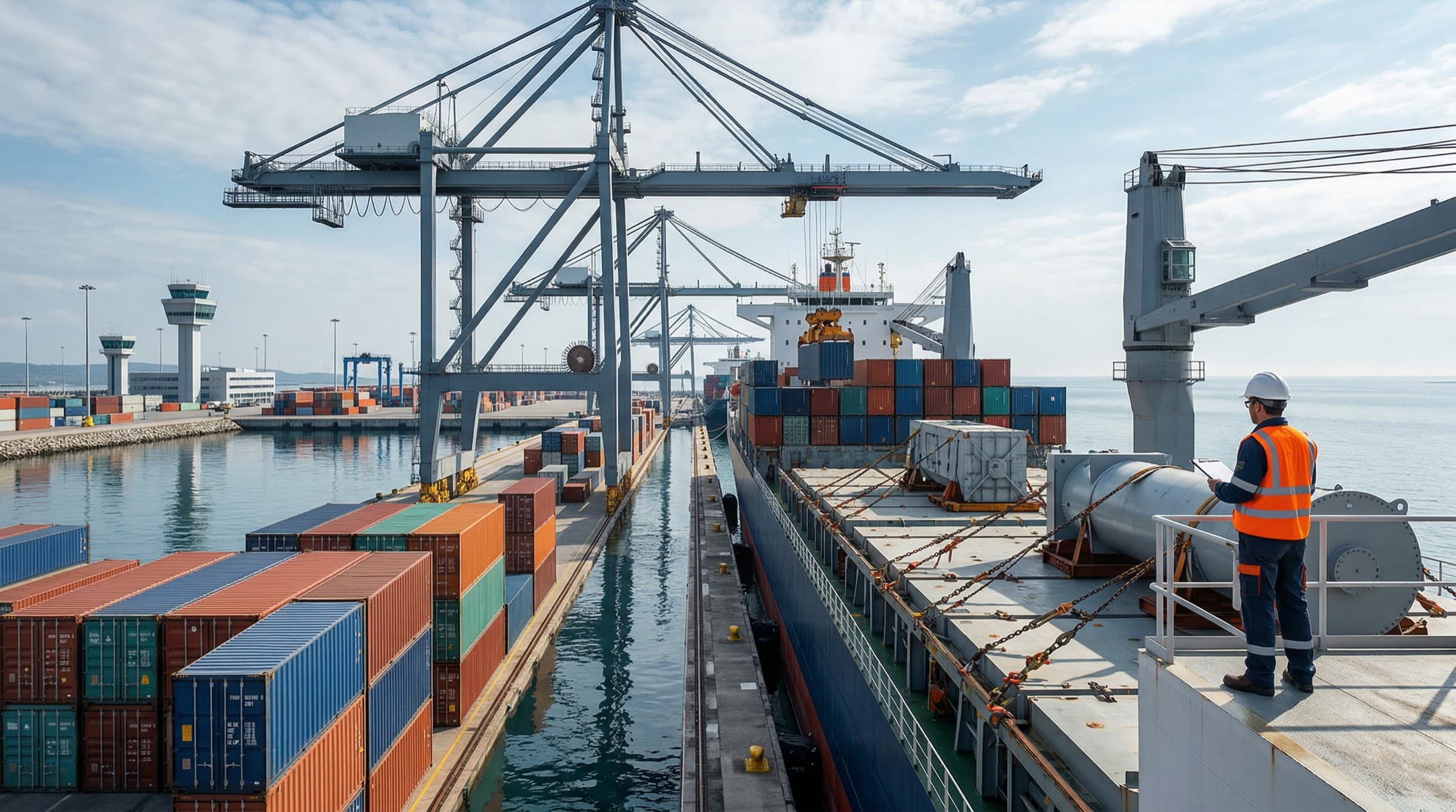
What is dunnage and why is it used?
Dunnage is timber, plywood, airbags or similar material used to protect cargo from the ship's structure, from other cargo and from moisture, to spread loads and to allow ventilation. It is an essential part of stowing steel coils, pipes and machinery.
Insufficient dunnage can leave cargo in contact with sweat on the tank top, allow a heavy parcel to crush the one beneath it, or let lots drift into one another. The supercargo compares the quantity and placement of dunnage with the instructions received.
How does port rotation affect stowage?
On a multi-port voyage, cargo for the first discharge port has to sit on top or be easily accessible. Otherwise other parcels must be shifted to reach it, costing time and money and adding damage risk.
A stowage plan therefore has to account for discharge sequence as well as weight and volume. The supercargo checks that the sequence is respected during loading and flags how any late plan changes may affect discharge.
If the vessel will load more cargo after a partial discharge, it also helps to plan how the emptied spaces will be used without disturbing the remaining parcels. Such details matter most in tramp trades, where voyage plans change frequently.
What are the most common stowage mistakes on mixed cargo?
Most problems on site start as small deviations between the plan and its execution. An instruction not passed on at a shift change, or a loading sequence altered because a crane broke down, is often enough.
Typical mistakes include similar-looking products stowed side by side without marking, a heavy parcel placed on top of a delicate one, separation sheets laid incompletely and hold allocation never updated on the stowage plan. Most of these are easy to correct if they are spotted while the ship is still working.
Simple measures help catch errors early: a brief handover talk at each shift change, an up-to-date parcel list at every hatch and a photograph of each hold before it is closed.
What should be considered for different cargo types?
The right separation method depends on the physical nature of the cargo. Products that look alike but differ in grade or size carry the highest risk of mixing, so marking and accurate stowage records matter most for them.
Rebar of different diameters looks almost identical from a distance, steel plate thicknesses are only visible up close, and with bagged cargo in identical packaging the marks on the bags may be the only distinguishing feature. Steel coils add the question of tier and row arrangement, while pipes call for protected ends and a consistent stowage direction.
In practice, the main points are:
- Rebar: colour marks by diameter and grade, separate tiers
- Steel plates: stowage and tag checks by thickness and size
- Steel coils: tier arrangement, chocking and parcel boundaries
- Bagged cargo: bag marks and sectioning within the hold
- Pipes and profiles: end protection, direction and interlayer dunnage
How does a supercargo monitor separation?
The supercargo marks on a working list which hold and tier each parcel goes into, photographs the laying of separation material and confirms hold distribution with the ship at the end of each shift. A final stowage plan that matches these records gives the discharge port team a reliable map.
The required separation and acceptable methods should be spelled out in the principal's instructions. Karan Gözetim can carry out this monitoring as part of its supercargo service from Gemlik, with the scope agreed at the quotation stage.
Frequently asked questions
Who pays for dunnage and separation material?
This is normally settled in the charter party and the sales contract. Some contracts put dunnage and separation on the cargo side, others on the ship side, so the contract should be checked before the operation.
Can bulk parcels be separated?
Yes, but options are more limited. Different parcels usually go into different holds; sheets or tarpaulins can separate lots within a hold, but perfect separation at discharge cannot always be achieved. The accepted method should be stated in the contract.
Is there a standard colour code for parcel marking?
No. Colours are usually agreed with the shipper or receivers and recorded on the parcel list. What matters is that the marking is easy for the discharge port team to recognise and is applied consistently.
Topics
- cargo separation
- parcel separation
- what is dunnage
- mixed cargo stowage
- separation of parcels on board
- stowage of steel parcels