
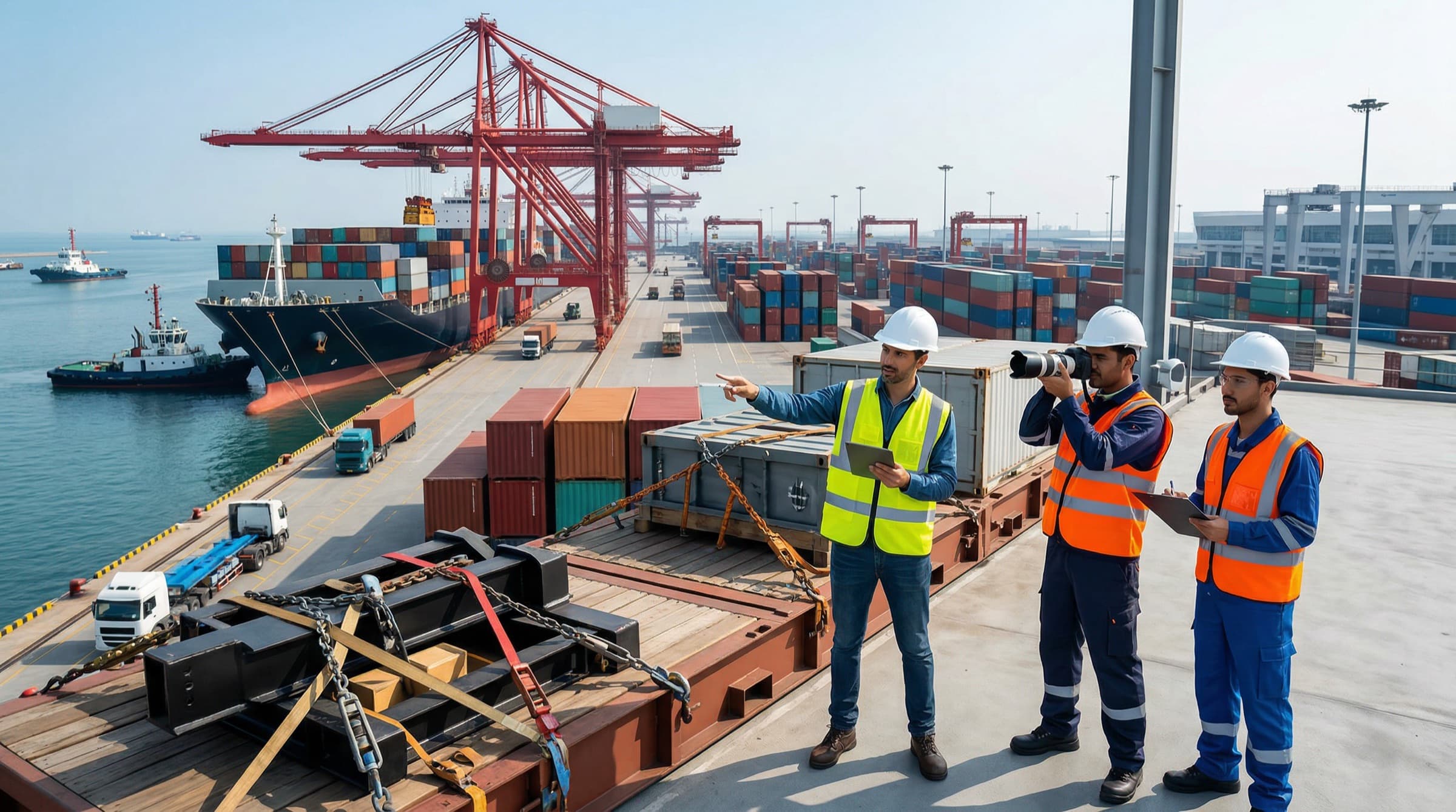
Lashing is the securing of cargo on board with chains, wire, turnbuckles and chocks to prevent it from shifting or tipping during the sea passage. The service covers either carrying out the lashing or inspecting and supervising it; proper lashing is critical for the safety of the cargo, the vessel and the crew.
What is Lashing and Cargo Securing?
At sea a vessel is in constant motion through rolling, pitching and wave action. This motion can cause insufficiently secured cargo to shift, become damaged and endanger the vessel's stability.
Lashing means securing cargo with lashing materials and methods suited to its type, weight, centre of gravity and position on board. The work should be consistent with the vessel's approved Cargo Securing Manual and the IMO Code of Safe Practice for Cargo Stowage and Securing (CSS Code).
Securing is not limited to lashings alone. Laying dunnage to spread loads, filling voids with shoring and chocks, and using friction-enhancing materials are also part of cargo securing.
Depending on the operation, the service may cover carrying out the lashing, or inspecting and supervising lashing performed by others. Which model applies, and who supplies the materials, is agreed at the quotation stage.
Why does it matter?
Cargo shift is a well-known cause of both cargo damage and ship safety problems at sea. A heavy unit that breaks loose can damage surrounding cargo, the ship's structure and hold fittings, and in serious cases cause the vessel to list.
In claims arising from inadequate or faulty securing, liability is assessed according to how the lashing was done at the load port, who approved it and the conditions at completion. Photographing the condition of the lashing at completion is therefore important.
Obtaining accurate cargo data before loading and planning the securing arrangement around the cargo helps avoid both unnecessary material use and inadequate securing.
Who is it for?
- Companies shipping project cargo, machinery and heavy lifts
- Owners and charterers carrying steel products and general cargo
- Cargo owners who want assurance that their cargo is secured for sea
- Parties shipping on-deck cargo
- Insurers seeking an independent check of the securing arrangement
Scope of service
- Review of cargo dimensions, weight and centre of gravity
- Selection of the securing method according to cargo type
- Observation of securing points on board (lashing eyes, D-rings, etc.)
- Visual check of lashing materials and their markings
- Carrying out the lashing, or inspection/supervision of lashing work
- Check of dunnage, shoring and chocking
- Final check and photographic record of the completed lashing
- Planning of unlashing before discharge (on request)
The exact scope is agreed at the quotation stage according to the nature of the operation.
Key checkpoints
- 01Lashing angles and symmetry
- The surveyor checks that lashings are arranged at angles that restrain the cargo both longitudinally and transversely and are balanced; lashings working in one direction only are noted.
- 02Material condition
- Chains, wires, turnbuckles and locking devices are checked for deformation, wear, corrosion or missing parts, and for working load markings.
- 03Securing points
- Securing points on board and on the cargo are checked for soundness and whether they appear suitable for the forces expected.
- 04Shoring and dunnage
- The surveyor assesses whether there is adequate dunnage between cargo and ship's structure, whether voids are filled and whether the friction surface is sufficient.
- 05Tension and locking
- Turnbuckles are checked for adequate tightening and locking, edge protection on sharp corners, and correct termination of wire ends.
How does the process work?
- 01
Cargo and vessel data
Cargo dimensions, weight, centre of gravity and stowage position are obtained, together with relevant information from the vessel's Cargo Securing Manual.
- 02
Planning
Suitable securing points, materials and methods are determined, taking any manufacturer's instructions into account.
- 03
Lashing or supervision
Lashing is carried out to the plan, or the work is supervised; deficiencies are reported or rectified immediately.
- 04
Final check
The completed lashing is inspected and recorded with photographs.
- 05
Reporting
The method applied, materials used and findings are reported to the client.
Information we need from you
- Cargo dimensions, weight and centre of gravity
- Vessel name and planned stowage position (under deck or on deck)
- Any manufacturer's or shipper's securing instructions and lifting drawings
- Whether lashing work or inspection/supervision is required
- Operation date and port
Reporting
- Lashing inspection record
- Photographic appendix
- List of deficiencies and nonconformities found
Report content and format are agreed according to your request.
Key terms
- Cargo Securing Manual (CSM)
- A ship-specific, approved manual setting out the principles of cargo stowage and securing on that vessel and describing its securing equipment.
- CSS Code
- The IMO Code of Safe Practice for Cargo Stowage and Securing, which gives guidance on stowing and securing cargo, including non-standardised cargo.
- MSL (Maximum Securing Load)
- The maximum allowable load that may be applied to a securing device when used for cargo securing.
- Shoring / Chocking
- Filling the gaps between cargo and the ship's structure or other cargo with timber supports and chocks to prevent movement.
Frequently asked questions
Why is lashing important?
Inadequately secured cargo can shift at sea, damaging itself, surrounding cargo and the vessel; in serious cases it can affect the vessel's stability.
Who carries out the lashing?
Depending on the operation, either the lashing work itself or the inspection and supervision of lashing done by another team can be requested. The model to be applied is agreed at the quotation stage.
Who supplies the lashing materials?
This depends on the operation and the agreement between the parties; it is clarified at the quotation stage.
Who decides whether the securing is adequate?
Final acceptance that cargo is safely stowed and secured on board rests with the master. A lashing inspection supports the master and the parties in reaching that decision on a documented basis.
Is unlashing at the discharge port also available?
On request, unlashing before discharge can also be planned; the scope is agreed at the quotation stage.