
A supercargo is a representative appointed by the cargo owner or charterer to attend cargo operations and make sure loading, stowage and documentation follow that party's instructions. The supercargo is neither a ship's officer, a terminal employee nor an independent surveyor, but the principal's eyes and voice on site. The exact job description varies from contract to contract.
Where does the word supercargo come from?
The term derives from the Spanish and Portuguese "sobrecargo", loosely meaning the person over the cargo. In the age of sail, the supercargo sailed on behalf of the merchant, selling the outbound goods and buying the return cargo. The master ran the ship; the supercargo ran the trade.
Commercial decision-making has long since moved to offices and agents, but the core idea survives. When the cargo interest cannot be present, it appoints someone to protect its position and to see that decisions on site respect its instructions. Today's supercargo usually works in port, although on some trades the role still involves sailing with the vessel.
What are a supercargo's main duties?
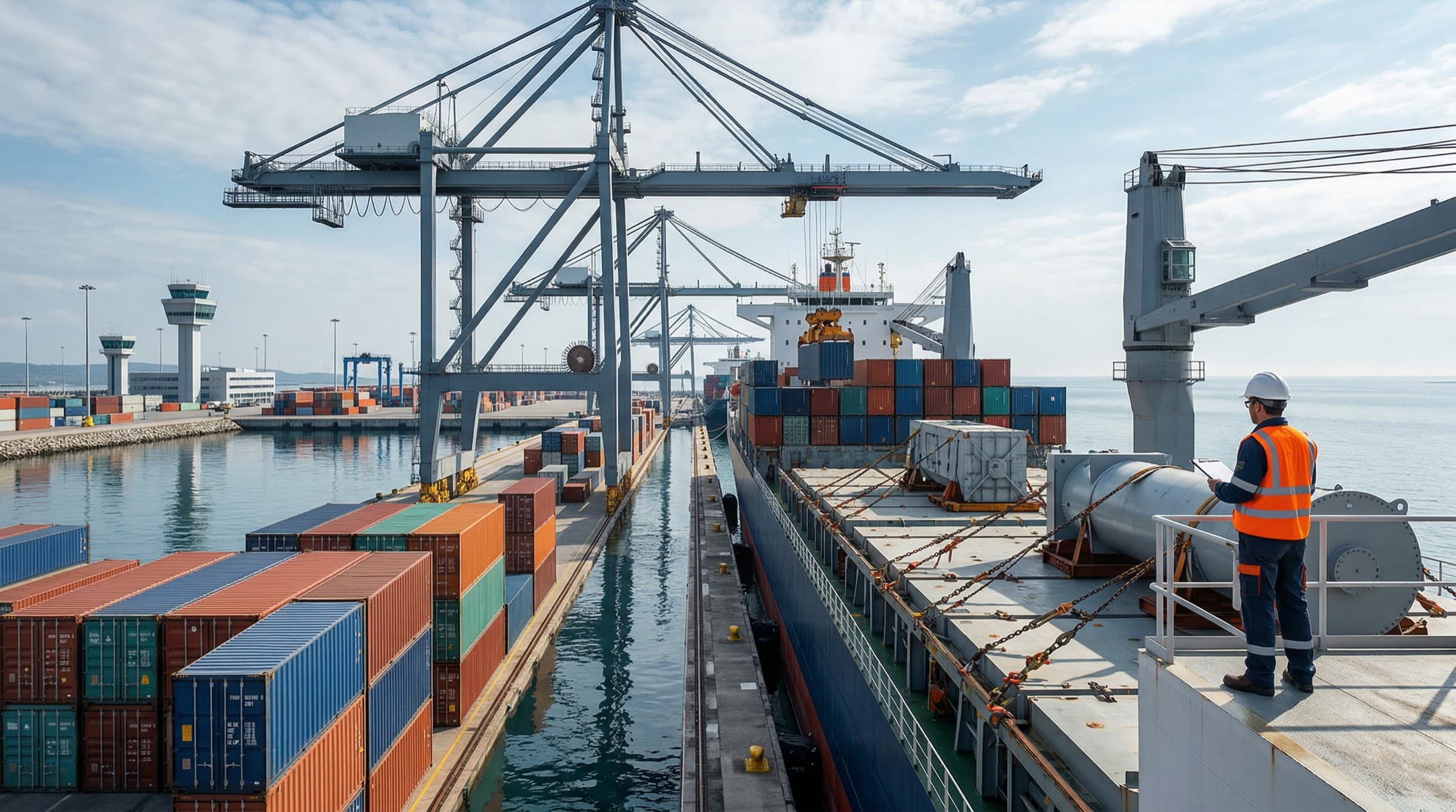
In essence, the supercargo compares the principal's written instructions with what is actually happening on the quay and in the holds. Before operations begin, that means liaising with the vessel, terminal and agent and reviewing the stowage plan; during operations, it means following where, in what sequence and how each lot is placed.
The scope expands or narrows with each job, but the following tasks come up most often in practice.
- Monitoring loading sequence and hold allocation against instructions
- Keeping parcels for different receivers properly separated
- Observing the use of dunnage, separation material and protective covers
- Checking mate's receipts and loading lists against the principal's records
- Relaying plan changes promptly and seeking approval where needed
- Summarising the operation in a structured report at completion
Where does a supercargo's authority begin and end?
Authority is the most misunderstood part of the role. A supercargo has no command authority on board: the master keeps the final word on safety, stability and the safe stowage of cargo. The terminal, likewise, controls its own equipment and labour.
The supercargo's leverage comes from the contractual rights of the party that appointed them. A charterer's supercargo, for instance, can speak for the charterer when exercising rights granted under the charter party. That is why it pays to agree in writing, before the job starts, what the supercargo may approve, what they should merely report and where they must wait for instructions from head office.
Who appoints a supercargo?
Supercargoes are typically appointed by shippers, exporters, receivers or charterers. An exporter loading steel products for several buyers on the same ship, for example, may want someone on site to make sure each parcel ends up in the right hold and on the right documents.
Under time charters the charterer controls the commercial employment of the ship and may wish to place its own supercargo. Several widely used time charter forms contain clauses dealing with a charterers' supercargo on board, including accommodation and victualling. Whatever the practice, the governing terms are always those agreed in the contract between the parties.
What makes a good supercargo?
The job calls for a working knowledge of ship and port operations, the ability to read a stowage plan and a feel for the risks particular to each cargo. Steel coils, project units, bagged goods and dry bulk all behave very differently under the hook and in the hold.
Communication matters as much as technical knowledge. In a single shift the supercargo may speak to the master, chief officer, terminal planner and agent several times. Defending an instruction without creating friction, recording deviations in neutral language and giving head office a clear picture are a large part of doing the job well.
What does a supercargo's working day look like?
A supercargo's day usually starts before work begins, with a short meeting with the ship and the terminal planner to confirm which holds will work that shift, which parcels are due and whether any equipment is out of service. Open questions from the principal are raised at this point.
Most of the day is spent on the quay and at the hatch coamings: comparing the loading sequence with the working list, photographing separation material as it is laid, talking to the duty officer when something departs from the plan and relaying the outcome to head office. At the end of the shift the day's records are pulled together into a short status report.
A typical day breaks down roughly as follows:
- Pre-shift planning talk with ship and terminal
- Hold-by-hold, parcel-by-parcel monitoring of loading
- Photographing and reporting deviations as they occur
- Cross-checking tally sheets against loading lists
- End-of-day status report to the principal
Why do cargo interests appoint a supercargo?
Without a representative on site, stowage and sequencing decisions tend to follow the priorities of the vessel and the terminal, which do not always match those of the cargo owner. A parcel placed in the wrong hold or poorly separated from another lot can turn into lost time and extra cost at the discharge port.
Because a supercargo spots such issues as they happen, there is still a chance to correct them before the hatches close. Karan Gözetim provides supercargo services from Gemlik, with the scope and limits of authority agreed at the quotation stage.
Frequently asked questions
Is a supercargo the same as a cargo superintendent?
The titles overlap and are sometimes used interchangeably. In many companies, however, a cargo superintendent is an employee overseeing cargo matters across a fleet or trade, while a supercargo is appointed for a specific operation or voyage on behalf of a cargo interest.
Does a supercargo need a seagoing background?
There is no single mandatory qualification. In practice, principals look for people who understand ship operations, stowage plans and cargo characteristics, and a seagoing or port operations background is the most common route to that knowledge.
Can a supercargo's report replace an independent survey report?
Usually not. A supercargo represents one party, so the report reflects that party's perspective. Where an impartial finding is needed, for example on quantity or condition, an independent survey or draft survey is normally commissioned separately.
Topics
- what is a supercargo
- supercargo duties
- supercargo meaning
- supercargo responsibilities
- cargo owner's representative
- supercargo role