
Lashing is the securing of cargo to the ship's structure with chains, wire rope, turnbuckles, web lashings and similar equipment so that it cannot slide, tip or move during the sea passage. Its purpose is to absorb the forces generated by the ship's rolling and pitching safely, protecting the cargo, the vessel and the crew.
What does lashing actually mean?
In maritime use, to lash means to bind cargo firmly to a strong point. Lashing therefore refers to the lashings themselves and to the act of applying them. The broader term, cargo securing, covers every measure that keeps cargo in place: lashing, but also blocking, chocking, shoring and the use of friction-enhancing material.
In practice, lashing starts once the cargo has been landed in its stowage position and must be completed before the vessel sails. Releasing the lashings at the discharge port is known as unlashing.
Which forces act on cargo at sea?
A ship at sea moves in six degrees of freedom. For cargo securing, the most significant motions are rolling, pitching and heaving, which generate transverse, longitudinal and vertical accelerations on the cargo.
Cargo carried on deck is also exposed to wind pressure and the impact of seas breaking on board. Transverse forces are generally regarded as the most critical, because rolling pushes cargo towards the ship's side and tries to slide or tip it. Stowage position matters too: accelerations tend to be higher towards the ends of the ship and at higher tiers.
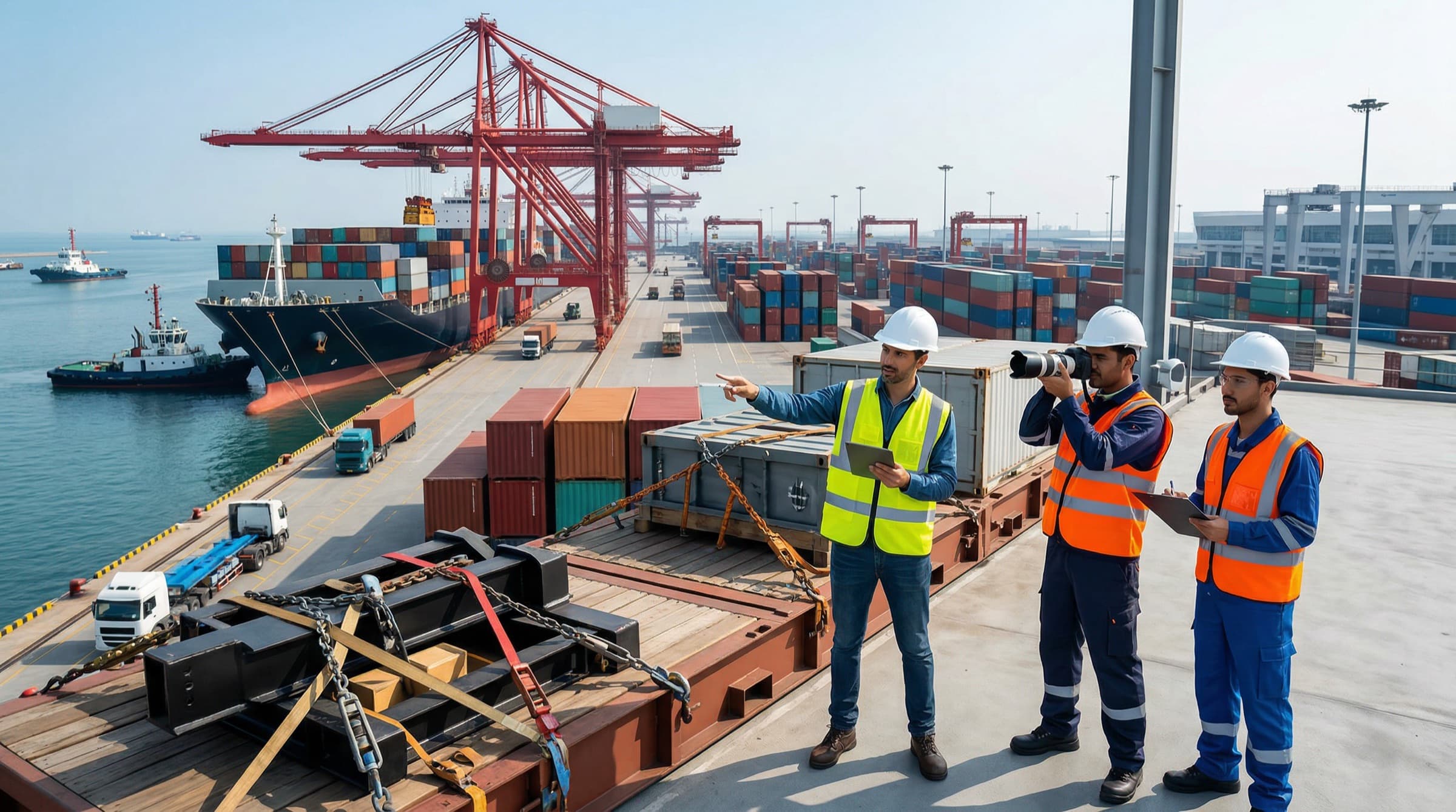
Which methods prevent cargo from shifting?
Cargo securing rarely relies on a single technique. Several methods are combined according to the weight, shape and centre of gravity of the cargo and the securing points available.
- Direct lashing: chain, wire or web lashings run between a securing point on the cargo and one on the ship
- Top-over lashing: lashings passed over the cargo to press it down and increase friction
- Blocking and chocking: fixed stops placed in the direction the cargo could move
- Shoring: timber or steel members filling the gap between cargo and ship structure
- Friction-enhancing material: dunnage and anti-slip mats improving contact with the tank top or deck
- Tight stowage: units stowed without voids so that they support each other
How does lashing differ from stowage?
Stowage is the decision on where and how cargo is placed on board: which hold, which tier, next to or on top of what. Lashing is what keeps the stowed cargo in that position.
The two cannot be separated. Poor stowage may be impossible to compensate for, however carefully the cargo is lashed. A tall unit with a high centre of gravity stowed athwartships, or a heavy item placed on top of light cargo, will overload the securing arrangement. The lashing plan should therefore be developed together with the stowage plan.
What are the most common lashing mistakes?
Many cargo shifts can be traced back to simple faults that could have been spotted at the load port. The following are frequently found during inspections.
- Lashings arranged so that they only work in one direction
- Materials of different elasticity used together in the same direction
- No edge protection, allowing wire or webbing to be cut on sharp corners
- Turnbuckles not tightened or not locked
- Lashings attached to parts of the cargo never designed as securing points
- Missing dunnage, leaving cargo sitting directly on steel
What can happen when cargo is poorly secured?
Inadequately secured cargo may start to move in the first spell of heavy weather. Even a small shift turns into shock loads on the lashings, which can then part one after another. A heavy unit on the move can crush neighbouring cargo and damage hold fittings and the ship's structure.
In serious cases, cargo piling up against one side can give the ship a list. Crew sent to re-secure cargo at sea face a dangerous working environment in bad weather. On top of that come damage claims, delays and disputes between the parties over liability. Most of these outcomes can be prevented by careful securing and inspection at the load port.
Who decides whether the lashing is adequate?
The reference document for stowing and securing cargo on a particular ship is its approved Cargo Securing Manual, while the IMO Code of Safe Practice for Cargo Stowage and Securing (CSS Code) sets out the general principles. The final decision on whether the cargo is properly secured for sea rests with the master.
Shippers, charterers and insurers may still want the securing independently checked and documented. Karan Gözetim offers lashing and cargo securing services from its base in Gemlik; the exact scope is agreed at the quotation stage.
Frequently asked questions
What is the difference between lashing and unlashing?
Lashing is securing the cargo at the load port. Unlashing is releasing the lashings in a safe sequence at the discharge port before the cargo is lifted. Lashings under tension should always be slackened in a controlled way.
Is container lashing the same as general cargo lashing?
The aim is the same but the method differs. Container ships use standard systems such as twistlocks, lashing rods and bridge fittings. For general and project cargo, the securing arrangement is planned for each individual item.
Does cargo stowed below deck also need lashing?
Yes. Cargo in the holds is subject to the same ship motions. Tight block stowage can reduce the need for lashings, but voids and heavy units must always be considered, in line with the Cargo Securing Manual and the master's judgement.
Topics
- what is lashing
- lashing meaning shipping
- cargo securing basics
- how to prevent cargo shift
- lashing methods
- securing cargo on ships