
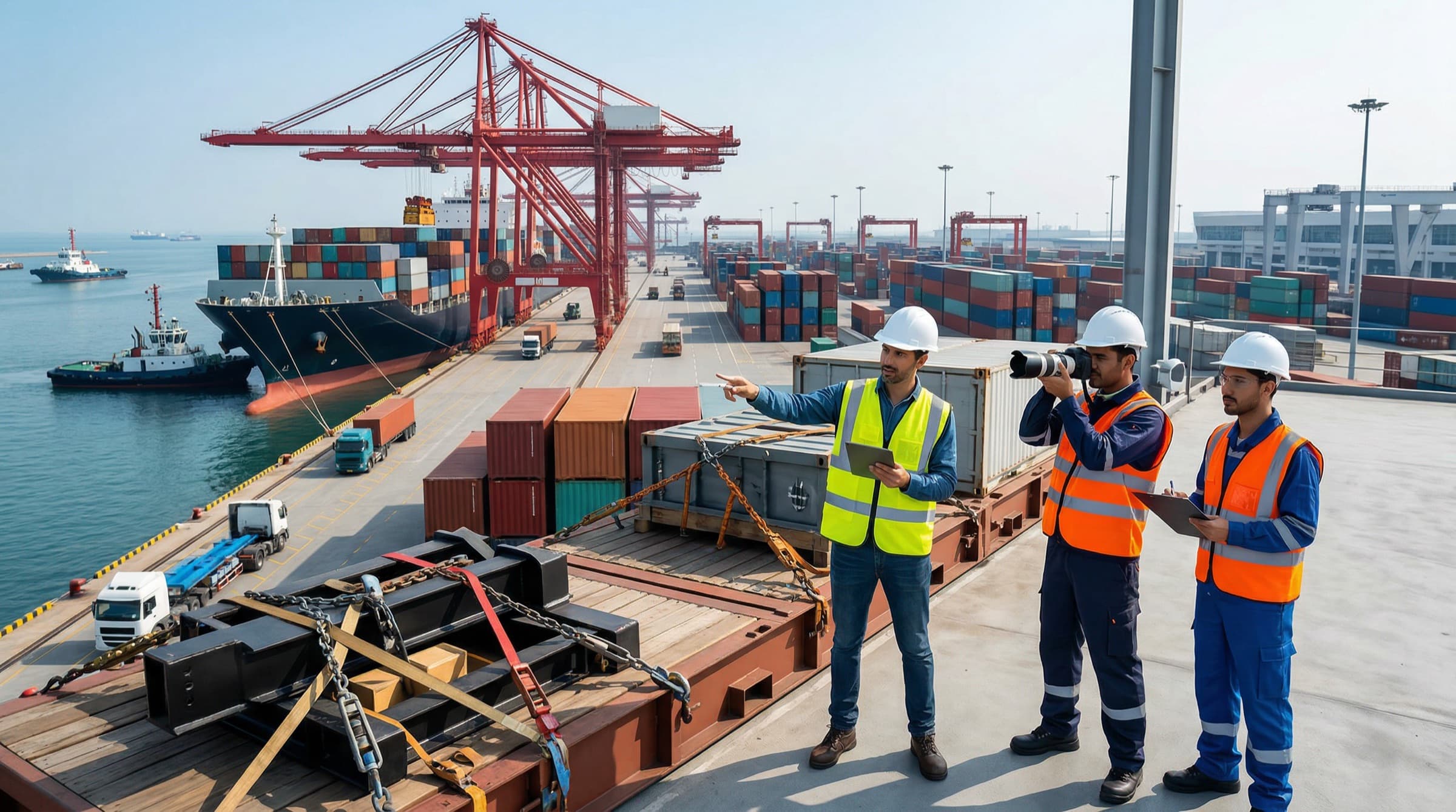
Lashings are inspected before sailing by systematically checking equipment condition, the lashing pattern and angles, tension and locking, dunnage and supports, and by keeping a photographic record. Any deficiencies are put right before departure, and the final decision rests with the master in line with the ship's Cargo Securing Manual.
Why is the final lashing check a separate step?
Lashing is often carried out in the middle of a busy operation, by several gangs and under time pressure. In those conditions an unlocked turnbuckle or a forgotten edge protector is easily missed.
A final check gives a fresh pair of eyes, independent of the gang that did the work, a chance to review every lashing. It also documents the condition of the cargo before departure, which becomes the reference point if a claim arises.
To be effective, the check should follow a prepared list and a fixed order, for example equipment first, then the pattern, then supports and finally the record. A consistent sequence helps ensure nothing is missed when several items are inspected during a busy operation.
What should be checked on the equipment?
The inspection starts with a visual check of every component. A single doubtful item reduces the capacity of the whole lashing.
- Chains: any stretching, cracks, bending or heavy corrosion?
- Wire rope: broken strands, crushing, kinks or rust?
- Webs: cuts, tears or heat damage, and is the label legible?
- Turnbuckles, shackles and hooks: any deformation, are pins fully home?
- Are capacity markings present on the equipment?
- Have materials of different elasticity been mixed in the same direction?
How are the lashing pattern and angles assessed?
Sound equipment will not hold cargo if it is badly arranged. At this stage, check that the lashings restrain the cargo in every direction.
- Do lashings restrain the cargo transversely and longitudinally?
- Is the arrangement symmetrical, or bunched on one side?
- Are the angles balanced against both sliding and tipping?
- Are lashings attached to designated points on the cargo?
- Do the ship's securing points look sound and suitable?
- Is edge protection fitted on sharp corners?
- Are turnbuckles tightened and locked, and wire terminations correct?
How are dunnage, chocks and shoring checked?
Supports beneath and around the cargo matter as much as the lashings. Check that the dunnage is of adequate section, in sound condition and placed under the load-bearing points of the cargo.
Check that voids have been filled with chocks or shoring, that shores are tight and that chocks are fixed in place. A loose chock can work free at sea and allow the cargo to move. Where anti-slip mats are used, confirm they are correctly positioned.
Also confirm that the dunnage is not crushed or split under the weight and that the cargo is nowhere in direct contact with steel. Wet or rotten timber loses strength and can transfer moisture to the cargo.
How should records and photographs be kept?
A good inspection ends with a good record. Photographs and notes are the main evidence of the condition of the securing at the load port.
- Take an overall view of each item first, then close-ups
- Document critical points such as turnbuckle locks, wire terminations and edge protection
- Preserve the date and time data of the photographs
- Link each record to the cargo description and stowage position
- Note each deficiency, who it was reported to and how it was rectified
What should be added to the checklist for specific cargo types?
The general checklist works for most cargo, but certain types need extra items targeting their particular risks of shifting or damage.
- Steel coils: chocks and wedges tight, no gaps between rows
- Vehicles and machinery: brakes applied, gear engaged as appropriate, booms and buckets secured
- Crated cargo: crates strong enough for the lashing force, webs not crushing the crate
- Deck cargo: wind-exposed surfaces, tarpaulin lashings and clear walkways
- Pipes and long sections: tiers supported against sliding and ends protected
What happens when a deficiency is found?
Every deficiency is reported straight away to the lashing gang and the chief officer. Once rectified, the point is re-inspected and the record updated. Any deficiency that cannot be rectified should be clearly reported.
The final decision on whether the cargo is secured for sea rests with the master, within the framework of the ship's Cargo Securing Manual. Karan Gözetim provides lashing and cargo securing services from Gemlik; the scope is agreed at the quotation stage.
Frequently asked questions
When should the final lashing inspection take place?
After lashing is completed and before the ship sails, leaving enough time to rectify any deficiencies. On large operations, interim checks as each item is completed make the process smoother.
Who should carry out the final check?
The ship's officers always check the securing themselves. In addition, the shipper, charterer or insurer may ask for the lashings to be inspected and documented by an independent party.
Who is responsible for checking lashings at sea?
Once the vessel has sailed, monitoring and re-tensioning the lashings is the responsibility of the ship's crew. These checks are carried out when weather and sea conditions allow, with crew safety as the priority.
Topics
- lashing inspection checklist
- how to inspect cargo lashing
- pre-sailing cargo check
- cargo securing checklist
- lashing survey
- final lashing inspection