
Lashing equipment consists of the chains, wire ropes, web lashings, turnbuckles, shackles and securing points used to hold cargo in place on board. The right choice depends on the cargo's weight, surface, sharp edges and the securing points available, and every component must be used within its maximum securing load (MSL).
How is lashing equipment selected?
Selection starts with the forces the cargo will experience at sea, so the weight, dimensions, centre of gravity and securing points of the cargo must be known. Two items of the same weight, one a compact machine and the other a long girder, may call for completely different equipment.
The cargo surface also matters. Painted or coated surfaces may favour web lashings over chain, while steel products with sharp edges may require chain or wire because webbing can be cut. The ship's portable securing devices and their characteristics are listed in the Cargo Securing Manual.
When is chain lashing used?
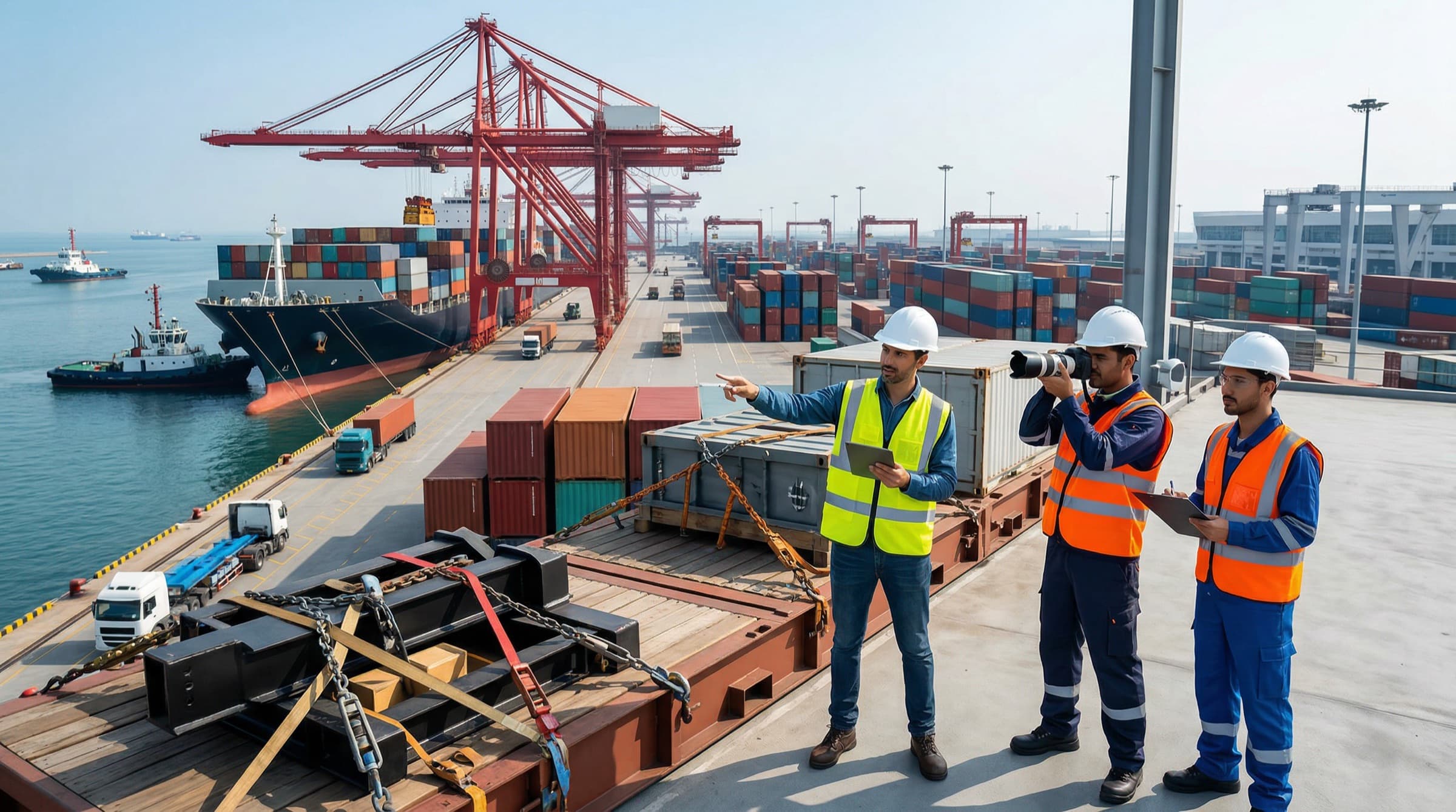
Chain is widely used for heavy units, vehicles, construction machinery and steel products because of its high strength and low elongation. It is normally combined with a lever tensioner or a turnbuckle and fitted with hooks at the ends.
Links must be free of stretching, cracks, bending and heavy corrosion. A hook whose throat has opened up may indicate overloading. Running chain over a sharp edge can reduce its strength, so suitable protection at corners is advisable.
How is wire rope lashing applied?
Wire rope offers a flexible solution for long lashings and large, irregular cargo. Eyes are usually formed with thimbles and secured with wire rope grips, and the lashing is tensioned with a turnbuckle.
Fitting the grips the right way round and in sufficient number, and terminating the wire correctly, are among the most critical points. The number and spacing of grips should follow the manufacturer's instructions and the ship's Cargo Securing Manual. Wire with broken strands, crushing, kinks or corrosion should not be used.
Which tensioning and connecting fittings are involved?
A securing arrangement is only as strong as the small fittings that connect it to the ship and the cargo. The weakest link sets the capacity of the whole system.
- Turnbuckle: allows fine tensioning and must be locked once tightened
- Lever tensioner and ratchet: give quick tensioning on chain and webbing
- Shackle: connects components to each other or to a securing point; the pin must be fully home
- D-rings and lashing eyes: fixed securing points on deck or in the hold
- Hooks and end fittings: must be sized to suit the securing point
- Container fittings: standard items such as twistlocks, lashing rods and bridge fittings
Which cargo suits web lashings?
Polyester web lashings are light, quick to apply and gentle on cargo surfaces. They are common on crated machinery, cases, painted parts and medium-weight items. Each web should carry a legible label showing its rated capacity; webs without a readable label should be rejected.
Webbing is easily cut on sharp edges, so edge protectors should be standard practice. Webbing also stretches differently from chain and wire. Mixing materials of different elasticity in the same direction means the stiffer lashing picks up the load first, leading to uneven load sharing.
How should lashing equipment be stored and maintained?
The service life of equipment depends heavily on how it is stored. Chains, turnbuckles and shackles should be kept dry and sorted by type and rating. Turnbuckle threads should be kept clean and greased; seized or rusted turnbuckles should be repaired or withdrawn before use.
Web lashings should be kept away from sunlight, chemicals and heat, and never stowed away wet. After discharge, released equipment should be counted and damaged items tagged and set aside. For the ship's own portable securing devices, inspection and maintenance records are kept as required by the Cargo Securing Manual.
What is MSL and why does it matter?
The maximum securing load (MSL) is the highest load a securing device may be subjected to in service. It is not the breaking load; it includes a margin of safety. When assessing a securing arrangement, each component's MSL is used, and the lowest-rated item in the chain is decisive.
That is why equipment should be marked, certified and undamaged, visually checked before use, with doubtful items set aside. Karan Gözetim provides lashing and cargo securing services from Gemlik; the scope regarding equipment and execution is agreed at the quotation stage.
Frequently asked questions
Can lashing equipment be reused?
Chains, turnbuckles and shackles can be reused as long as they are undamaged and their markings are legible. Wire ropes and webs should be checked for wear, cuts and crushing before every use, and doubtful items withdrawn.
Is breaking load the same as MSL?
No. Breaking load is the load at which a component fails. MSL is the highest load permitted in service and is set well below the breaking load. Securing calculations are based on MSL.
Does dunnage count as lashing equipment?
Dunnage is not a lashing as such, but it is part of cargo securing. It spreads the load, increases friction and keeps cargo off bare steel, reducing the risk of both damage and shifting.
Topics
- lashing equipment
- lashing materials
- chain lashing
- wire rope lashing
- turnbuckle lashing
- web lashing
- maximum securing load