
A port captain is a representative who attends in port on behalf of shipowners or charterers to plan the vessel's cargo operation, coordinate between ship, terminal, agent and stevedores, and keep the work safe and efficient. The role centres on the vessel's time in port and on executing the stowage plan correctly. Its exact scope varies between companies and contracts.
What does the title port captain mean?
Port captain is a long-established title, particularly in liner shipping. There it usually describes a former master or chief officer working ashore and running the company's vessel operations in a given port or range of ports.
In tramp and project shipping, a port captain is more often appointed for a particular call or operation. Some companies use other titles for similar work, such as marine superintendent or operations supervisor. Whatever the label, the common thread is protecting the principal's operational interests on site.
What does a port captain do before the vessel arrives?
The work starts well before berthing. The port captain reviews the cargo list, pre-stowage plan, ship particulars and port restrictions and builds a realistic programme for the call. Terminal working hours, equipment availability and the berth schedule are key inputs.
A mismatch found at this stage, such as shore cranes lacking capacity for a project unit or insufficient water depth for the planned sailing draft, can be resolved before the ship arrives. Discovered with the vessel alongside, the same issue becomes an unplanned delay and an unbudgeted cost.
What are a port captain's duties during operations?
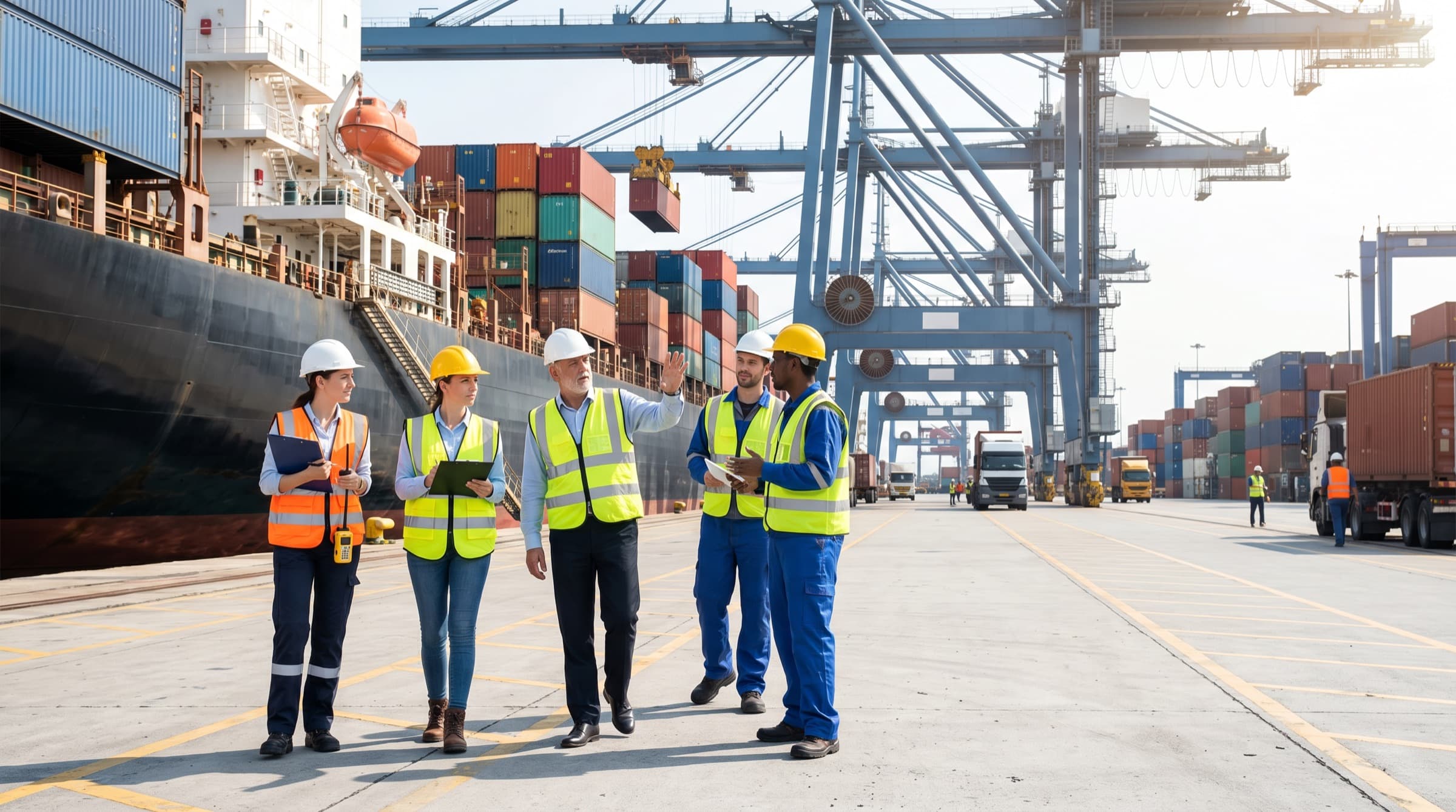
Once the vessel is alongside, the port captain acts as a constant link between ship's officers, terminal planning, the stevedore foreman and the agent. The aim is to see the plan carried out and to catch deviations early.
In practice, typical duties include:
- Following hatch sequence and gang allocation against the plan
- Checking that the stowage plan is executed correctly in each hold
- Passing the master's trim, draft and stability requirements to the terminal
- Logging stoppages with start and end times and their causes
- Coordinating plan changes with the principal's approval
- Sending the principal a daily status report
Does a port captain work for the owner or the charterer?
Either is possible, and the distinction shapes the job's priorities. An owner's port captain tends to focus on ship safety, structural load limits, equipment care and stevedore damage.
A charterer's port captain concentrates on productivity, on a stowage plan that serves the charterer's commercial needs and on making good use of the vessel's time. Under time charters, where the charterer controls commercial employment, charterers frequently appoint their own port captains. Which party is represented, and the limits of authority, should be agreed in writing before the appointment.
What knowledge and skills does a port captain need?
The role requires a sound understanding of ship stability, stowage planning, cargo handling gear and port operations. Port captains are therefore often drawn from former deck officers and masters, although there is no single mandatory qualification.
Just as important is the ability to bring parties with different priorities towards one goal. The terminal wants productivity, the ship wants safety and the charterer wants speed; the port captain finds a workable balance and confirms decisions in writing. Familiarity with SOLAS and the ISPS Code also helps in reading site rules correctly.
Which operations benefit most from a port captain?
On simple, repetitive calls the ship and agent are often enough. A port captain's contribution grows with the complexity of the operation and the pressure on time.
Project and heavy lift cargo, multi-port voyages where stowage sequence must be protected, mixed general cargo, shipments with a tight loading window and congested ports where waiting time builds up are typical examples. Having someone on site who can make decisions, or carry them quickly to the principal, helps keep time and cost under control.
On such operations, the port captain's records are also valuable afterwards. They show which stoppage happened for what reason, which plan change was approved by whom and where the operation lost pace, and the same information helps avoid repeating those problems on the next call.
How is the scope of a port captain appointment defined?
Before appointing a port captain, the principal should define which stages are expected: operational follow-up only, or pre-arrival planning and a closing report as well. Reporting frequency, communication channels and matters requiring approval are settled at the same time.
It should be clear that the port captain does not override the master's authority and that the terminal retains control of its own workforce. Karan Gözetim provides port captain services from Gemlik, with the scope agreed at the quotation stage.
Frequently asked questions
What is the difference between a port captain and a ship agent?
The agent handles port formalities, official notifications, ship's requirements and documentation. The port captain is a technical representative focused on planning and executing the cargo operation. The two roles complement each other and usually work closely together.
Is a port captain on board every day?
During operations a port captain is usually on board, on the quay or in the terminal planning office. How much time is spent on site depends on the intensity of the operation and the scope agreed with the principal.
Can a port captain work remotely?
Pre-arrival planning and document review can be done remotely. Following the execution of the stowage plan, the causes of stoppages and communication on site, however, usually requires physical presence in port while the vessel is working.
Topics
- what is a port captain
- port captain duties
- port captain role
- port captain job description
- port captain responsibilities
- owner's port captain