
The master commands the ship; the harbour master represents the public authority responsible for navigation and safety in the port; the port captain is a representative who plans and coordinates the cargo operation on behalf of owners or charterers. All three may be called captain, but their sources of authority, responsibilities and roles in port are entirely different.
Why are these titles so often confused?
In shipping, captain can describe a rank, a job or simply a form of address. Many former masters keep being called captain long after moving ashore into quite different roles, and the terms master, captain and harbour master are translated inconsistently between languages.
For cargo owners and traders the distinction matters, because knowing whom to approach and who can decide what directly affects the speed of an operation and the allocation of responsibility.
A cargo owner who takes a stowage request to the harbour master's office has gone to the wrong door, just as trying to settle a ship safety matter with the port captain alone will not work. Reaching the right person at the right time cuts the time lost during operations.
What authority and responsibilities does the master have?
The master is in command of the ship and responsible for the safety of the vessel, crew and cargo. International rules, SOLAS among them, protect the master's professional judgement on matters of safety and environmental protection, and that authority cannot be overridden by owners, charterers or any representative.
Commercially, the master often signs bills of lading and mate's receipts on behalf of the carrier, tenders the notice of readiness and endorses the statement of facts. The master also has the final say on whether stowage and securing are compatible with the safety of the ship.
If the master sees anything during operations that could endanger the ship, the master may stop work or require the plan to be changed.
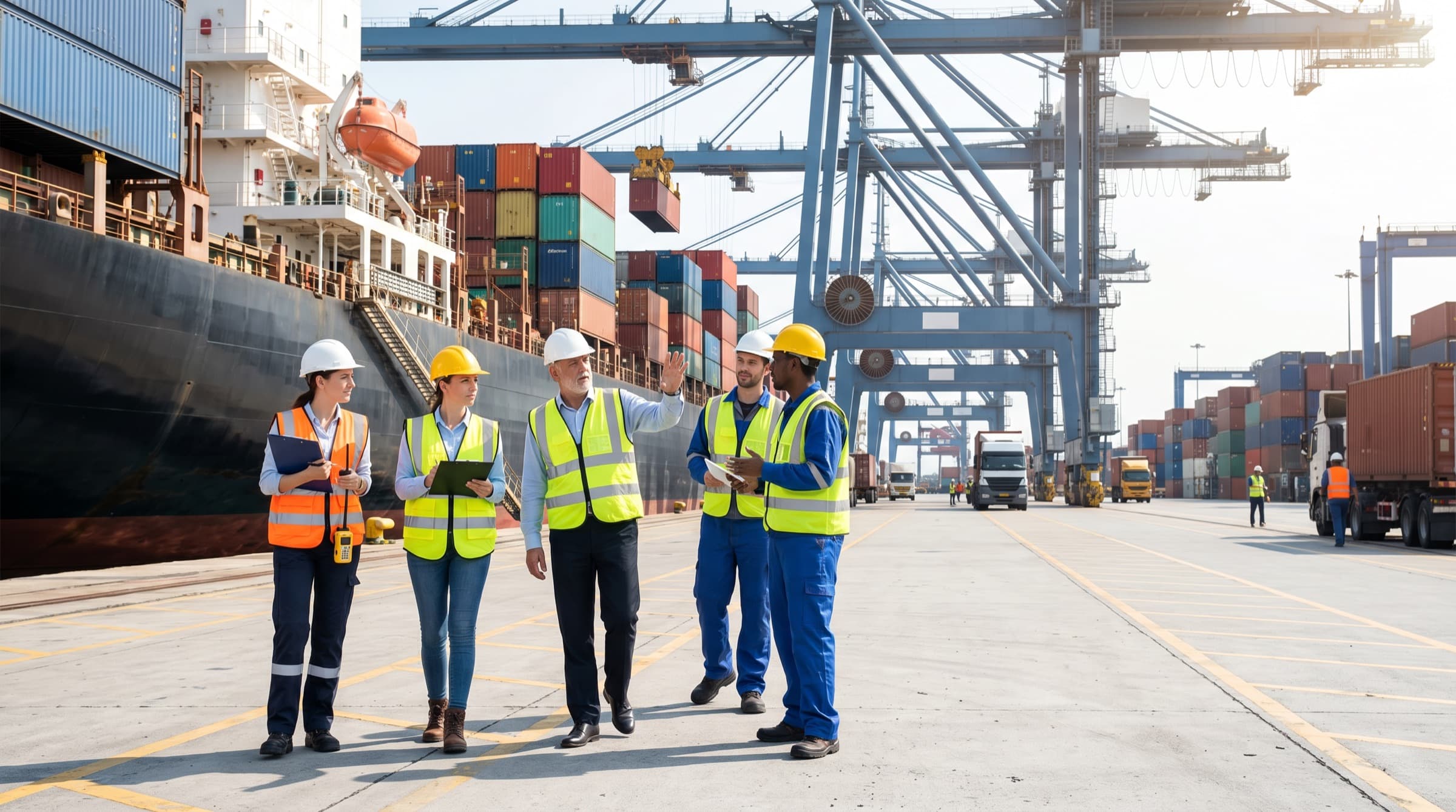
What does a harbour master do?
The harbour master represents the public authority in charge of navigational safety, vessel traffic, anchorages, pollution prevention and the formalities of arrival and departure. In Türkiye this function is carried out by the harbour master's offices.
The harbour master's office deals with departure clearance, inspections and casualty investigation. It does not concern itself with the commercial side of cargo work, such as which parcel goes into which hold, but it does enforce compliance with safety rules.
Where does the port captain fit in?
The port captain is neither the ship's commander nor a public official. The role draws its authority from the contractual rights of the owner or charterer who made the appointment, and its job is to plan the operation, coordinate the parties and protect the principal's operational interests on site.
A port captain can make recommendations to the master, ask the terminal for a particular working pattern and coordinate plan changes. Decisions on ship safety stay with the master, decisions on terminal labour with the terminal and administrative decisions with the harbour master.
A port captain's effectiveness rests largely on trust. A representative who respects the master's authority, understands how the terminal works and explains the reasons behind each request can shape the course of an operation considerably without holding any formal power.
Which other titles get mixed up with port captain?
Several other roles are often confused with the port captain. Each has a different function and they may all be involved in the same call.
- Pilot: an experienced mariner who advises on navigation and manoeuvring within port limits
- Ship agent: handles port formalities, official notifications and ship's requirements
- Marine superintendent: usually oversees technical and operational matters across an owner's fleet
- Supercargo: follows loading on behalf of the cargo owner or charterer
- Surveyor: makes independent findings on cargo or vessel
- Stevedore foreman: runs the terminal's loading and discharge gang
How do these roles work together in a typical call?
Take a simple example. As the vessel reaches the anchorage, the agent files the required notifications with the harbour master's office. The pilot boards, assists the master with manoeuvring and the ship berths. Once ready, the master tenders notice of readiness.
When work starts, the port captain agrees hatch sequence with terminal planning and trim and draft requirements with the master. If an independent finding on cargo condition is needed, a surveyor attends; if the cargo owner wants its own instructions followed, it appoints a supercargo. When each works within its own remit, the call runs more smoothly.
Who should you approach for what?
On safety, stability and whether stowage suits the ship, the master has the last word. Port entry and departure, anchorage and administrative permits fall to the harbour master's office. The agent is the first contact for formalities and documents, and the port captain for planning the operation and coordination on site.
Keeping these lines clear means decisions reach the right person and responsibilities are less likely to be disputed later. Karan Gözetim provides port captain services from Gemlik, with the scope agreed at the quotation stage.
Frequently asked questions
Does the harbour master get involved in commercial cargo operations?
Generally not. The harbour master's office deals with navigational safety, environmental protection and administrative permits. Commercial matters such as loading sequence or stowage preferences are settled between ship, terminal and the operational parties, while safety compliance is enforced.
Who is responsible while the pilot is on board?
The widely accepted position in international practice is that the pilot advises and guides, while the master retains command of the ship. Details can differ under national law and local port practice.
Is a port captain the same as a harbour pilot?
No. A pilot boards to assist with navigation in and out of port and leaves once the manoeuvre is complete. A port captain stays involved in planning and coordinating the cargo operation throughout the vessel's stay.
Topics
- port captain vs master
- harbour master role
- port captain vs harbour master
- ship's master duties
- marine pilot role
- who is the port captain