
Gallery
Steel coil discharge supervision
Gemlik4 photos
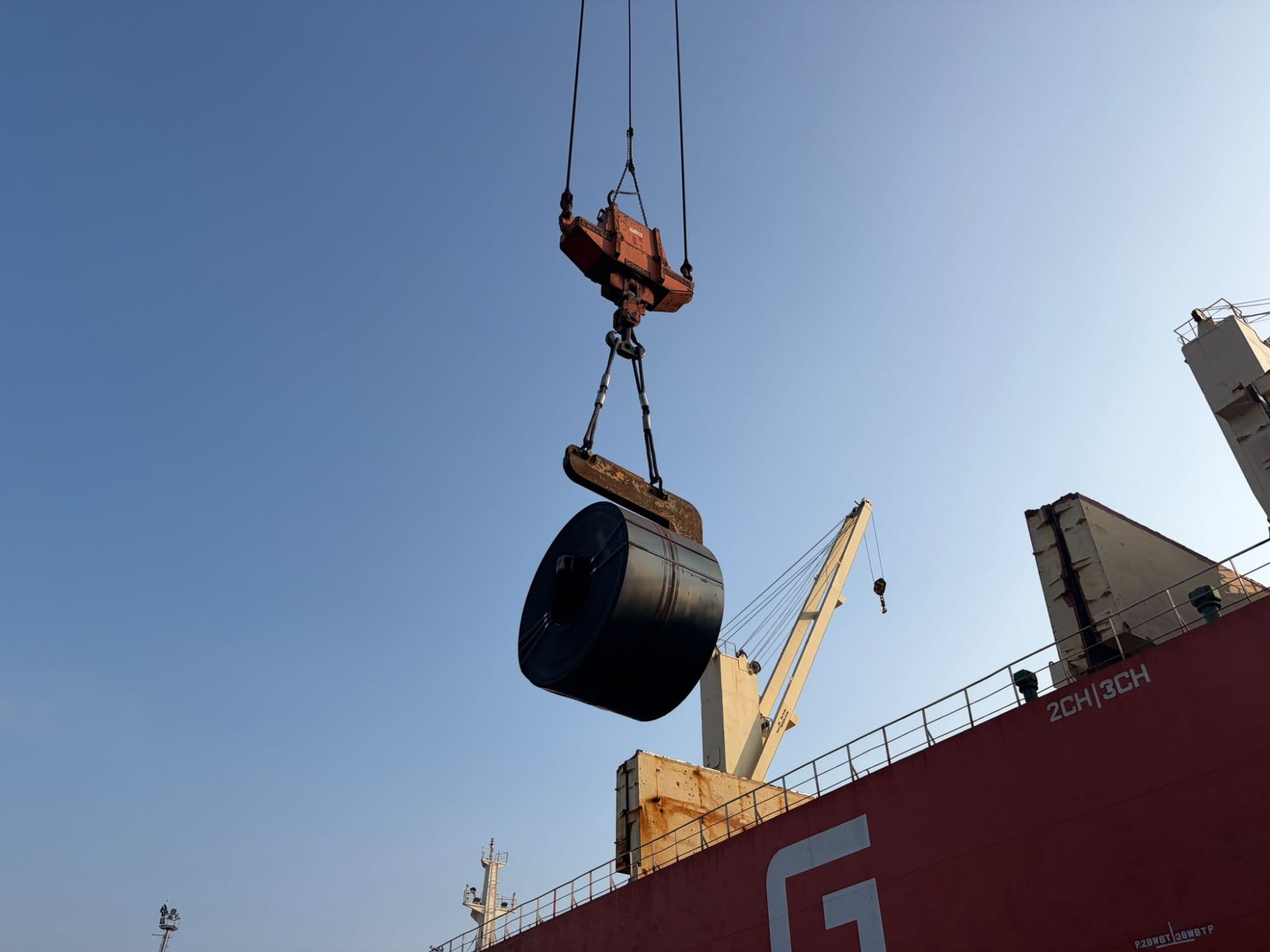
Every lift during a steel coil discharge carries risk for the cargo and for the people around it. During supervision we check that the lifting gear (C-hooks, slings, chains) is suitable for the cargo and that coils are moved without crushing or edge damage.
Coils are tallied throughout discharge, and each coil number and any visible damage is recorded. In operations with ship's cranes and shore cranes, damage that is identified and reported to the parties the moment it occurs prevents later disputes.
A hot-rolled coil being discharged by ship's crane using a C-hook. The C-hook protects the coil's inner diameter; the gear is checked for suitability before operations. Coil discharge with a mobile harbour crane. Crane selection and lifting capacity are assessed against coil weights. A packed cold-rolled coil lifted by ship's crane with textile slings. Textile slings protect the packing and edges of coils with sensitive surfaces. Coil operations on the night shift. While work continues around the clock, tally and damage records are kept with the same care.
More albums
 5 photos
Gemlik
Silver nitrate testing on steel coils
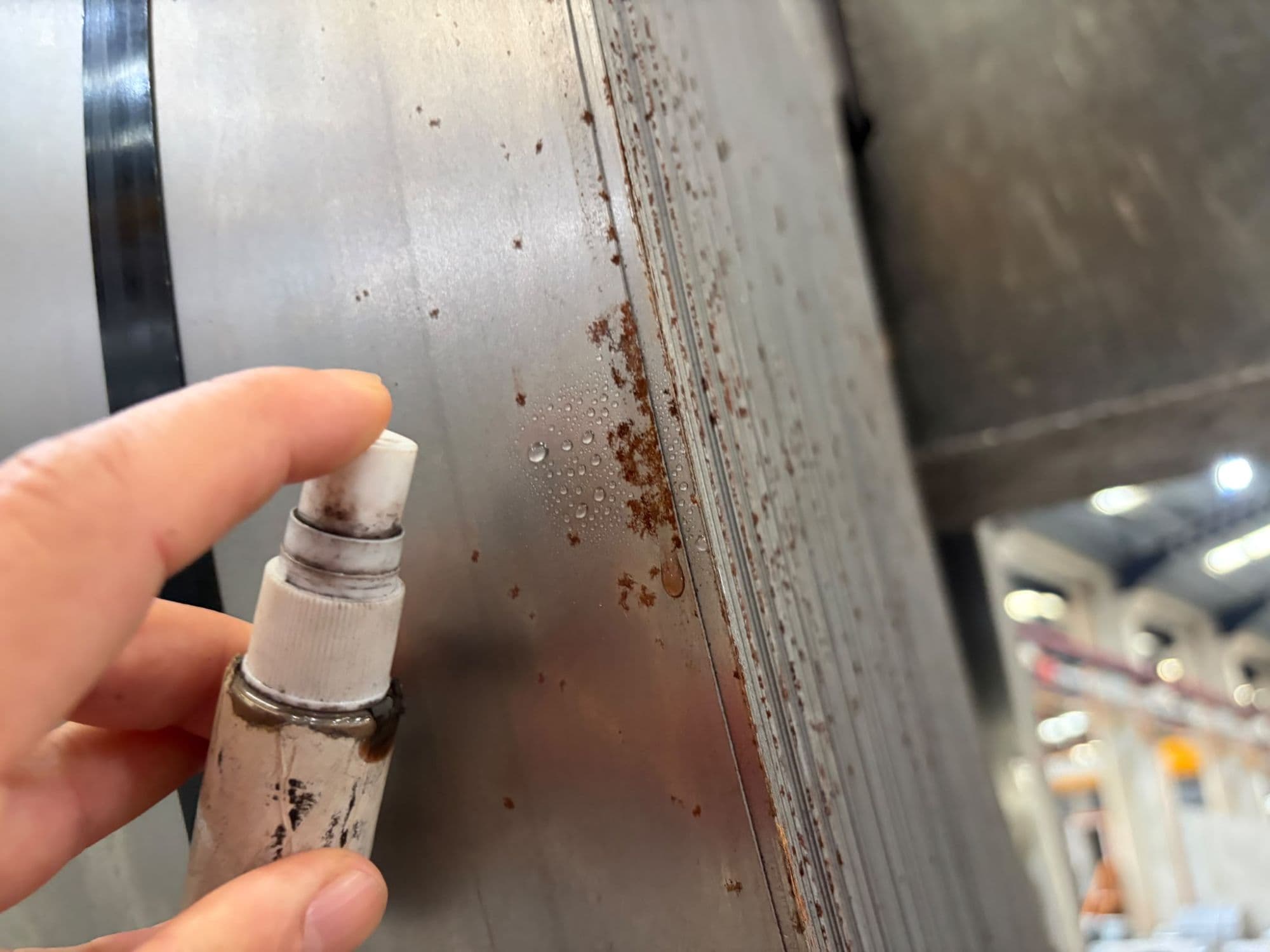
We use the silver nitrate (AgNO₃) test on site to identify the source of rust, wetness and water staining on steel coils. When the solution is sprayed on the suspect area, a white, milky precipitate (silver chloride) forms if chlorides are present, showing that the wetting came from seawater. If there is no reaction, the moisture most likely came from fresh water, such as rain or condensation (sweat).
View album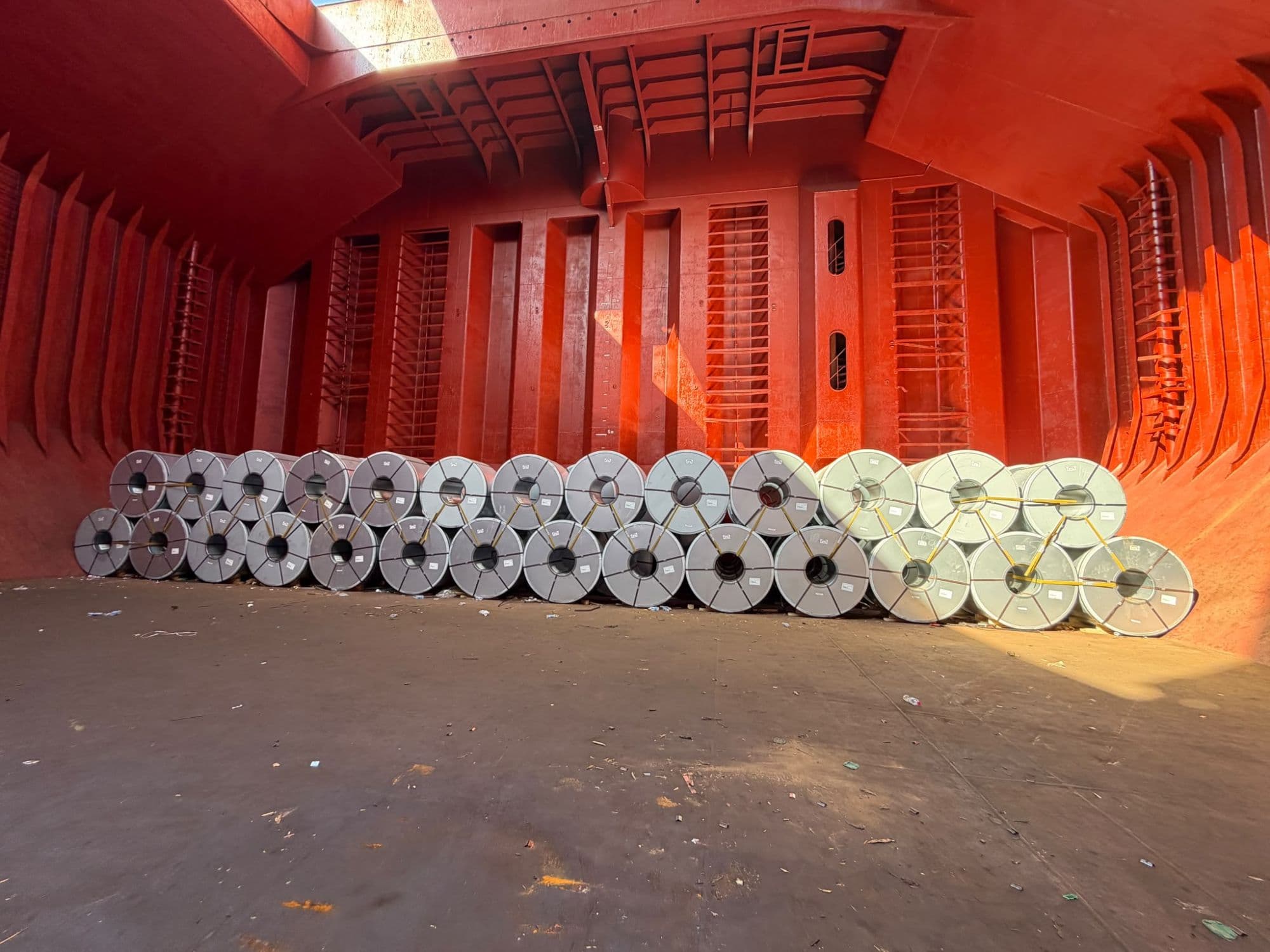 5 photos
Gemlik
In-hold steel coil cargo inspections
Because of their weight and round shape, steel coils are among the riskiest cargoes at sea. Without correct stowage, sufficient dunnage and secure lashing, coils can shift when the vessel rolls, crush against one another and damage the ship's structure.
View album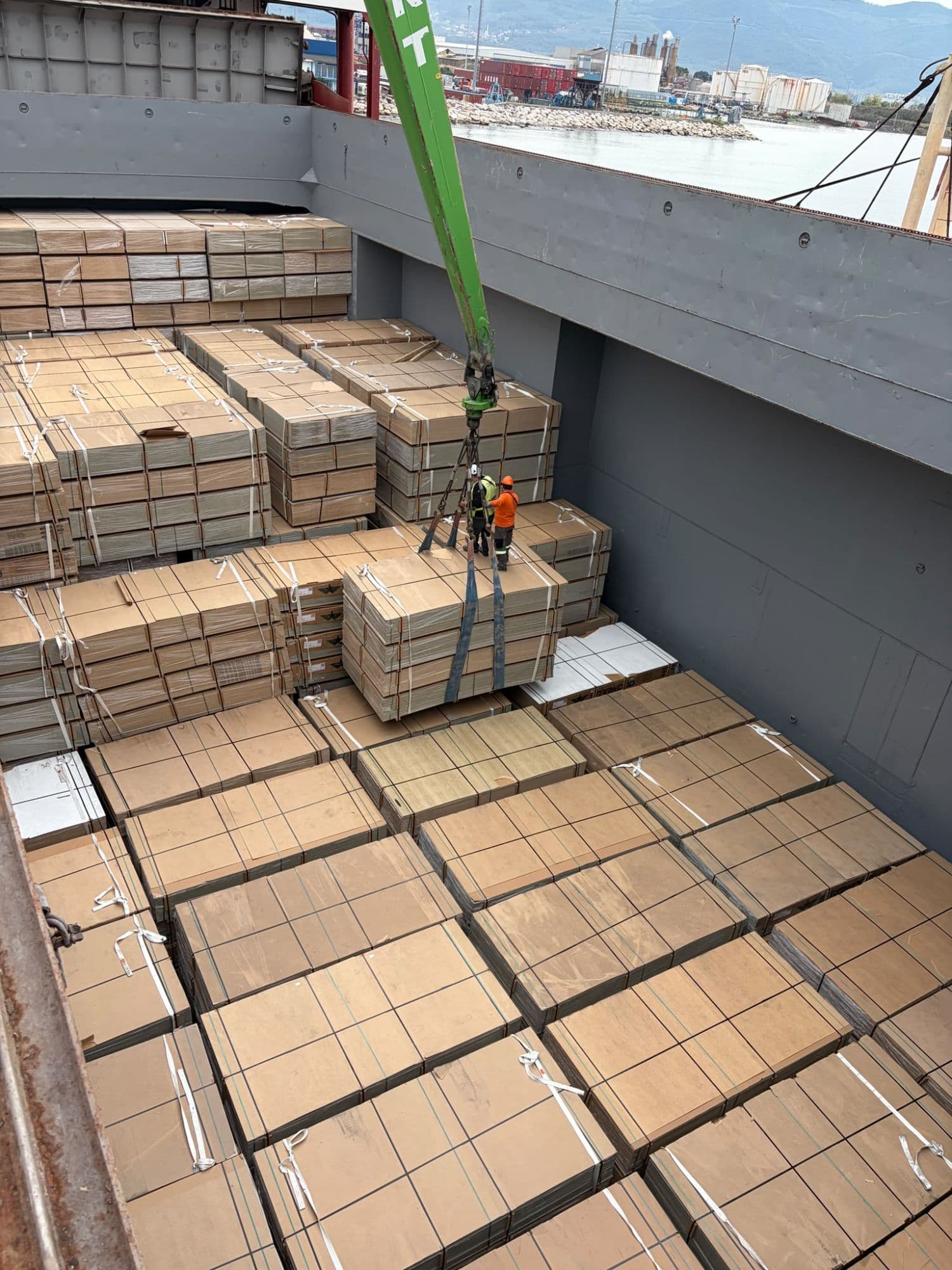 2 photos
Gemlik
Packaged panel cargo loading supervision
Packs of wood-based panels and boards are sensitive to moisture, impact and corner crushing. Wet or crushed packs can become unusable, so the hold must be clean and dry before loading, and packs must be lifted correctly and stowed evenly.
View album
Get a quote for your operation
Send us the vessel, port, cargo and the service you need; we will define the scope with you and prepare a quotation.